 Warehouse Security
Why access control is a people job as much as a hardware job
Card readers, gate arms and cameras are useful, but they only work as well as the procedure behind them. A badge reader cannot tell whether the driver in front of it matches the appointment, and a camera will record a trailer leaving without asking whether it should. Many of the schemes behind recent cargo losses are built around exactly that gap. Verisk CargoNet describes impersonation of legitimate carriers, business email compromise and shipment misdirection as ongoing tactics, where a thief arrives with paperwork that looks right and asks for a load by name. TT Club and BSI found that 22 percent of global cargo theft incidents in their 2025 report involved the cooperation of insiders.
SecureOne's warehouse access control puts a trained officer at the points where those decisions get made, working from written post orders that match your own procedures. The officer applies the same check to every driver, visitor and contractor, every time, and writes it down. Officers are assigned through our security officer services program, so a single building or a network of distribution centers can run the same procedure under one account with one point of contact.
Gate control and driver verification
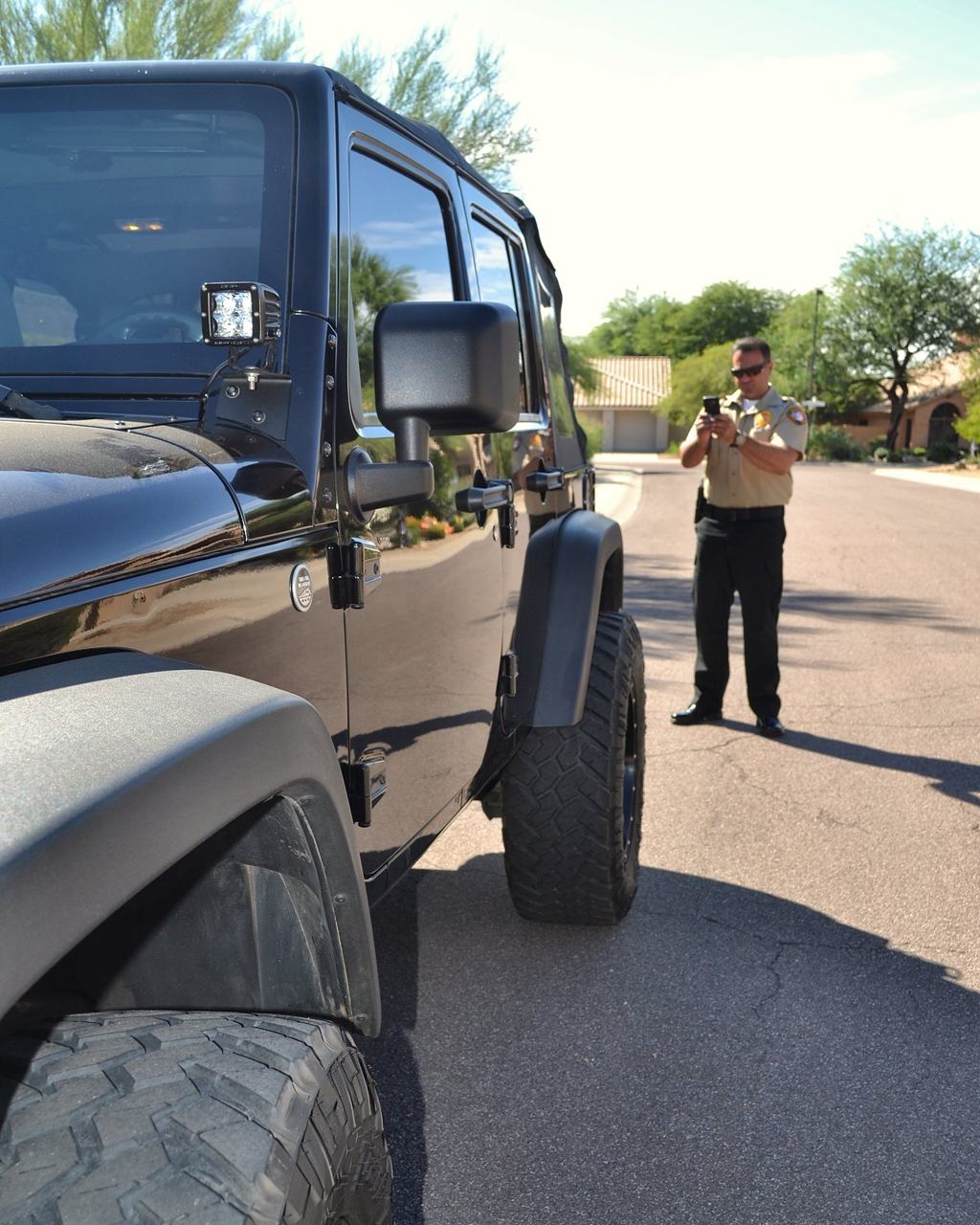
The gate is the first and best chance to stop a problem. At a SecureOne gate post, the officer checks the driver's identification, confirms the carrier name and the tractor and trailer numbers, and matches them against the day's appointments or pickup list before the truck enters the yard. If the carrier, the driver or the load number does not match, the officer does not guess. The truck waits outside the gate while the officer calls your shipping supervisor or the contact named in the post orders.
Outbound traffic gets the same attention. Before a loaded trailer leaves, the officer confirms that the paperwork matches the trailer and the seal and logs the departure time. That record gives your team a clean point in the timeline if a shipment is questioned later. The TAPA Facility Security Requirements, a logistics security standard used by many shippers, call for gates that are either manned or electronically controlled, and for a written procedure for handling unauthorized vehicles and people in the shipping and receiving yard that is delivered to the workforce, including guards. We put that procedure into the officer's post orders so it is followed on every shift, not only when a manager is watching.
Dock door control and seal checks
Inside the fence, the dock is where freight changes hands. Officers can confirm that each trailer is backed into its assigned door, record seal numbers on arrival and departure and compare them to the bill of lading. They keep drivers in the driver area rather than walking the dock floor, and they note doors left open with no trailer present, since an open door with nothing in it is an easy way for product or people to move without being seen.
These checks are simple, and they work best when they are consistent. An officer who records the same details for every trailer builds a log your claims team, your insurer or law enforcement can use if a loss is discovered days later. Our warehouse security guards page describes the dock post in more detail.
Visitors, contractors and temporary workers
Warehouses see a steady flow of people who are not regular employees: vendors, maintenance contractors, auditors, job applicants and, during peak season, large groups of temporary workers. Each one is a reasonable visitor, and each one is also a person who could end up somewhere they should not be. A visitor procedure gives everyone the same experience. The officer confirms who the visitor is there to see, issues a pass, records the time in and out and makes sure an escort is present where your policy requires one.
For temporary staff, the officer can check badges at the employee entrance at the start of each shift, help your HR team or staffing partner confirm who is scheduled and, where your policy calls for it, conduct exit checks. TT Club's guidance on operating a secure warehouse lists hiring due diligence, badges and uniforms among the procedural measures that belong in an effective program, alongside physical security.
Personal vehicles and parking near the dock
One of the simplest rules in a warehouse access plan is also one of the easiest to let slide: personal vehicles should not park next to the dock. A car parked a few steps from an open door makes it easy to move product off site. The TAPA Facility Security Requirements restrict personal vehicles from parking near external dock areas for this reason. Officers can enforce employee and visitor parking areas, log vehicles that park where they should not and report repeat problems to your managers so the rule is applied evenly.
Key, badge and alarm code control
Access control also covers what happens after hours. Officers can keep a key log, issue and collect keys and badges for contractors, and confirm at shift change that every key that went out came back. When an employee leaves the company, post orders can include a step to confirm with your team that the badge has been turned off and keys have been returned. For buildings that close overnight, our mobile patrol services can handle scheduled lock-up and unlock checks along with patrols of the yard and perimeter.
Working with your electronic access system
Many distribution centers already have card readers, gate arms, intercoms or a yard management system. SecureOne officers work alongside what you have rather than replacing it. Post orders can spell out how the officer uses your system, what to do when a reader fails or a gate arm sticks, and who to call when the system shows an alarm. Every officer learns these site procedures before the first shift as part of our security guard training, which our in-house Director of Training adapts for each account.
Officers record gate activity, visitor logs, incidents and photos in Vision InSites, our real-time reporting platform, so you can see what happened at the gate overnight without waiting for a weekly summary. If something needs attention right away, your single point of contact, available 24/7, calls you directly.
Exit routes stay open
Access control should never come at the cost of safety. OSHA's warehousing guidance says exit routes must be kept free and unobstructed and exit doors must not be locked or blocked. SecureOne post orders never ask an officer to chain or block an exit. Where a door needs control, the answer is an alarm, a camera or an officer, not a padlock. Our warehouse security checklist covers exits and the rest of the building in one afternoon's review.
Related services
Frequently asked questions
Can your officers use our gate, visitor or yard management system?
Yes. Post orders can spell out how the officer uses the systems you already have, and officers are trained on them during site orientation before their first shift.
What happens when a driver's paperwork does not match?
The officer holds the truck outside the gate and calls the contact named in your post orders. The vehicle is not admitted and no freight is released until your team confirms.
Do you staff gates around the clock?
We staff full-time posts as well as specific shifts, and we can pair a gate officer during operating hours with patrol coverage overnight. We recommend a plan after walking your site.
Sources: Verisk CargoNet, Q2 2026 theft trends, TT Club and BSI, 2025 cargo theft report, TAPA Facility Security Requirements 2023, TT Club, Operating a Secure Warehouse, OSHA, Warehousing: Hazards and Solutions.