 Warehouse Security
Cargo Theft Prevention for Warehouses: What the Latest Numbers Mean for Your Dock and Yard
Thieves are taking fewer loads but bigger ones, and more of the risk now sits at your gate, dock and yard.
Cargo theft used to be thought of as a trucking problem: a trailer taken from a truck stop or a load that never arrived. That still happens, but the latest data shows thieves becoming more selective and more willing to work through paperwork, phone calls and email instead of bolt cutters. For warehouse and distribution center managers, that changes where the risk sits. A growing share of it now sits at your gate, on your dock and in your yard.
The numbers behind the trend
Verisk CargoNet, which tracks supply chain crime across the United States and Canada, recorded 3,594 supply chain crime events in 2025, essentially the same as the 3,607 recorded in 2024. The count stayed flat, but the losses did not. Estimated losses rose 60 percent to nearly $725 million, and the average value per theft rose to $273,990, up from $202,364 the year before. Confirmed cargo theft incidents rose 18 percent, from 2,243 to 2,646.
The pattern carried into 2026. CargoNet recorded 767 events in the first quarter, a 5.3 percent drop from a year earlier, while estimated losses held at about $131.6 million. In the second quarter, incidents fell to 677, down 26 percent from the same quarter of 2025, yet estimated losses more than doubled to $304.6 million. Fewer thefts, bigger thefts. CargoNet attributes much of the shift to organized groups that pick high-value loads and use schemes such as business email compromise and shipment misdirection.
Food and beverage products were the most stolen category in 2025, with 708 thefts and a 47 percent increase, and metals theft rose 77 percent, driven by demand for copper. Geography is shifting too. CargoNet reported 2025 increases of 50 percent in New Jersey, 30 percent in Indiana and 24 percent in Pennsylvania, and TT Club and BSI list California, Texas and Illinois as the US states with the highest incident volumes in their 2025 report.
Why the warehouse matters
Thefts from facilities and warehouses account for roughly a quarter of recorded cargo theft incidents worldwide, according to TT Club. The TT Club and BSI 2025 report also found that 22 percent of global incidents involved the cooperation of insiders. Put those two findings together and the message is clear. The fence and the cameras are important, but so are the people and procedures that decide which driver gets a load and which trailer leaves the yard.
Five controls that make a warehouse a harder target
Verify every pickup at the gate
A fictitious pickup works when a driver with convincing paperwork meets a gate process that is rushed or inconsistent. A trained officer who checks the carrier, driver identification, trailer number and appointment against your records on every pickup removes that opening. When something does not match, the officer holds the load and calls the supervisor rather than guessing.
Check seals coming and going
Recording seal numbers when trailers arrive and depart, and comparing them to the bill of lading, gives you a clear point at which a shipment was intact. It also gives your claims team something concrete if a loss is discovered later.
Watch the yard after hours
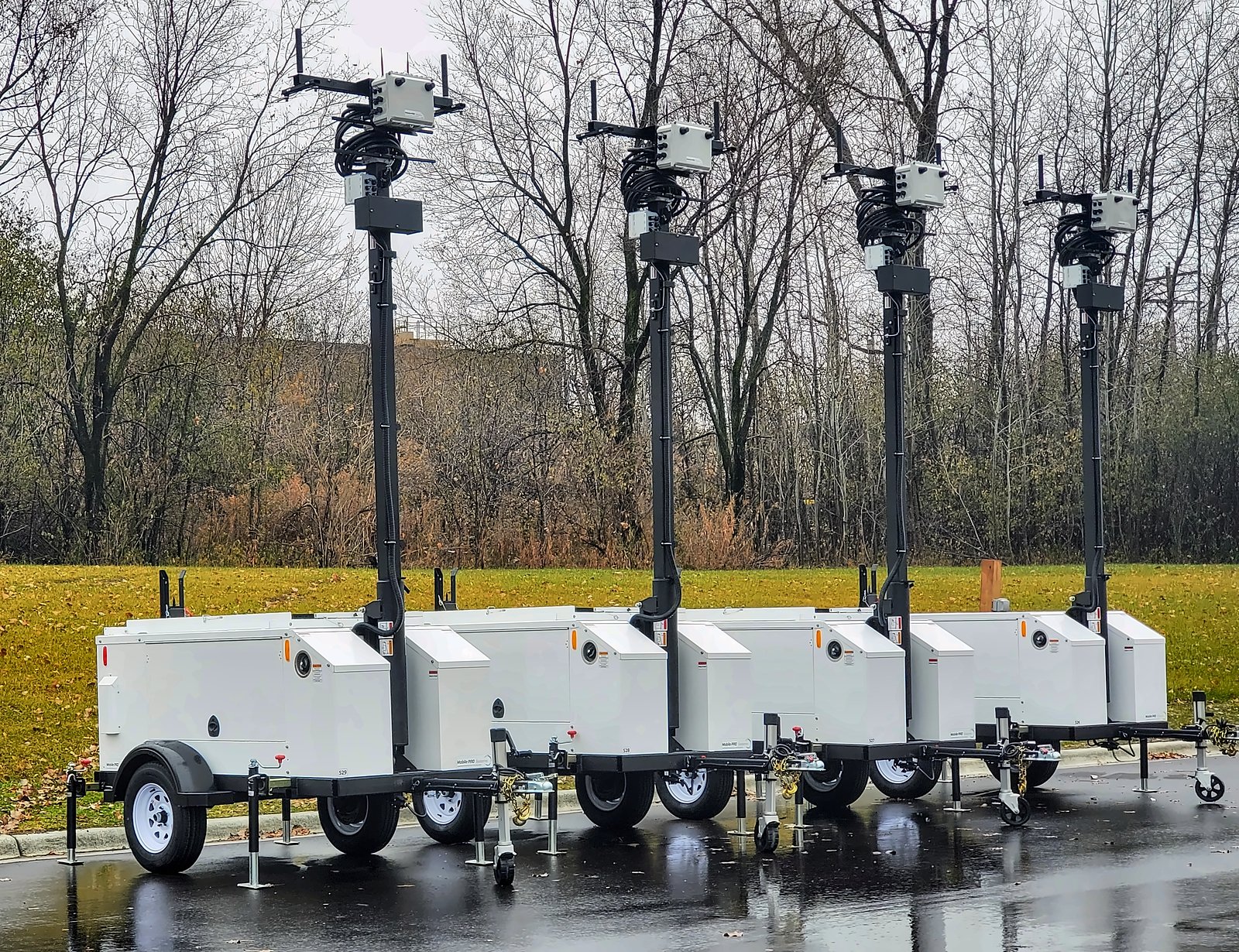
Loaded trailers staged overnight are an obvious target. Patrols at unpredictable times, lighting that actually works and cameras that cover the yard entry and the staging area all raise the effort required. The TAPA Facility Security Requirements, a logistics security standard used by many shippers, call for camera coverage of the shipping and receiving yard that makes vehicles and people recognizable, adequate lighting in loading areas and a physical barrier of at least 6 feet around the yard. A solar camera trailer can cover a yard or overflow lot quickly where permanent wiring is impractical, and mobile patrol services can put a uniformed officer on the property on a scheduled or random basis.
Close the insider gap
Badge control, visitor logs, rules that keep personal vehicles away from the dock and consistent exit procedures make it harder for product to leave through the employee door. TAPA's requirements, for example, restrict personal vehicles from parking near external dock areas. None of this assumes your employees are dishonest. It removes temptation and gives honest employees a clear routine to follow.
Write it down in real time
When a theft or near miss happens, the details matter: who was on the gate, which truck arrived when, what the seal number was. Officers who log activity in a real-time reporting platform give you a timeline you can hand to your insurer or to law enforcement. SecureOne officers use Vision InSites for exactly that.
Where to start
Begin with a walk of your own site at the times that matter most: shift change, the last outbound load of the night and 2 a.m. on a Sunday. Look at who controls the gate, whether seal numbers are recorded, how the yard is lit and whether anyone would notice a trailer leaving. Most warehouses find at least one gap. Our warehouse security checklist can help you organize that walk.
SecureOne has provided industrial security services for warehouses and distribution centers since 2002. If you would like a second set of eyes on your gate, dock and yard, read about our warehouse theft prevention and warehouse security guards services, or call (888) 834-5285 to schedule a walk-through.
Sources: Verisk CargoNet, 2025 theft trends, Verisk CargoNet, Q1 2026 theft trends, Verisk CargoNet, Q2 2026 theft trends, TT Club, Operating a Secure Warehouse, TT Club and BSI, 2025 cargo theft report, TAPA Facility Security Requirements 2023.
Want a second set of eyes on your warehouse?
Call (888) 834-5285 or request a quote and a SecureOne manager will schedule a walk-through.
Request a QuoteCall (888) 834-5285